Twitter: Digital Mediated Public Space (Dorothy Kim)
![[Screenshot: #GWFerguson on tumblr, December 4, 2014]](http://gwdhi.org/wp-content/uploads/2014/12/screen-shot-2014-12-04-at-11-54-14-am.png)
![[Screenshot: Hybrid Pedgagogy, December 4, 2014]](http://gwdhi.org/wp-content/uploads/2014/12/screen-shot-2014-12-04-at-11-23-26-am.png)

The George Washington University in Washington, D.C. joined PIT-UN in 2020, bringing a wealth of public interest technology experience and expertise to the network. The school has a long history of dedication to the public interest, and in recent years has made public interest technology a particular focus for students and faculty in coding, data…
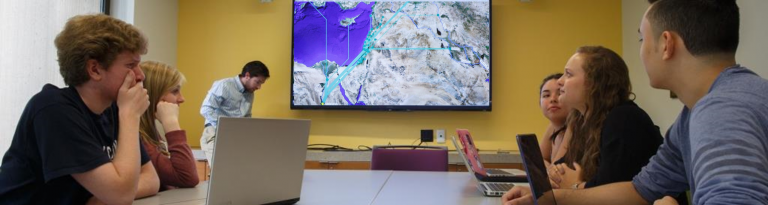
As previously announced on this blog, GW has been awarded a substantial Andrew W. Mellon grant to support “Resilient Networks to Support Inclusive Digital Humanities.” Competitive jump-start grants of $5000 are now being offered to member-institution faculty pursuing digital humanities projects! Read more about the scale and scope of the Mellon grant here. If you wish…
On Friday, February 6, the GW English Graduate Student Association (GWEGSA) organized its 2015 symposium entitled “Transvisceral,” an all-day event that concluded with a keynote by Sharon P. Holland. Thanks to Haylie Swenson for her work organizing this event! Swenson has also posted an archive of #GWEGSA15 tweets; of particular interest to readers of this blog…
During her talk at the World Bank, Alexa Alice Joubin raised questions about the intersectionality of technology and art. Art is front and center in digital transformations of our society today. Art fosters creativity, and creative thinking leads to social change.
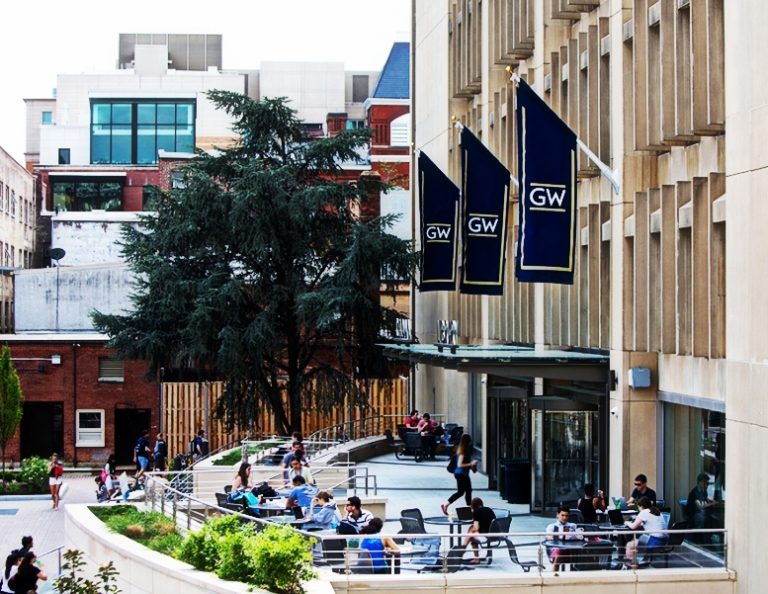
Announcement: GW Libraries has been awarded a $500,000 collaborative two-year grant from the Andrew W. Mellon Foundation to support networked projects in the digital humanities. Congratulations to CCAS Dean Ben Vinson, GW Librarian Geneva Henry, and XD@GW (Cross-Disciplinary Collaboration at GW) Director Diane H. Cline! Read more about this grant at GW Today.
[via Prof. Diane H. Cline, GW Department of History] THATCamp DC 2015 is coming to GWU on Saturday April 18th, and you won’t want to miss it. See who else is coming by visiting the event website’s list of campers! At this THATCamp there will be a planning meeting for GW DH’ers to develop a prioritized…