Student Spotlight: Akhilesh Rangani

Akhilesh Rangani (MS ‘ 26 computer science) is a software engineer and Founding Engineer at Tambo AI, where he helps build an open-source generative UI framework that enables applications to adapt interfaces based on natural language intent. He is a key contributor to GitWit, an open-source AI-powered developer environment for writing, running, and evaluating code.
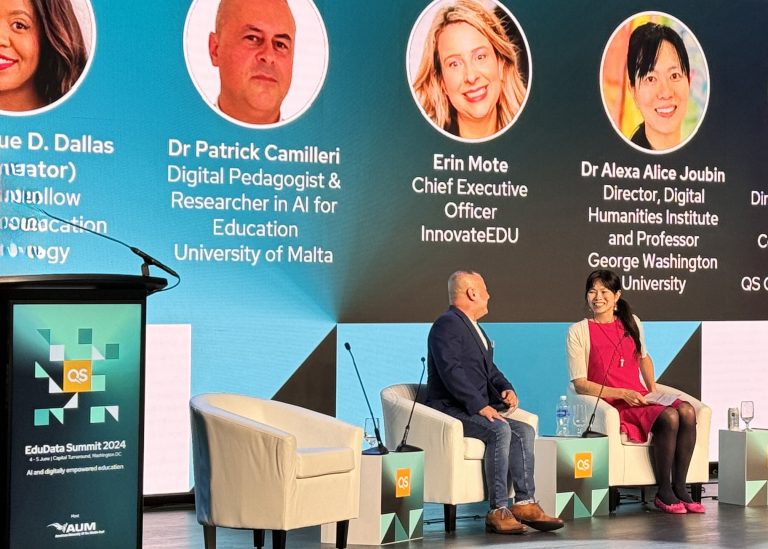
As a graduate student in Computer Science at George Washington University, Akhilesh worked with Professor Alexa Alice Joubin of the Digital Humanities Institute on a number of digital and AI projects, including developing her open access textbook Introduction to Critical Theory.
This open education resource (OER) project is a grass-root revolution to leverage public interest technology to democratize access to knowledge. Everyone can use the Gold OA (open access) textbook and its resident Socratic AI which operates in 58 languages. It is SOC2 compliant, requiring no login and protecting user privacy.
By clicking the dialogue bubble, users can interact with the “narrow,” high-functioning AI, which exclusively draws from the OER’s content and makes its reasoning transparent. A unique “contact Professor Joubin” button keeps a human expert in the loop for continual guidance. The OER supports non-linear exploration via thematic tiles and curated navigation through an intuitive menu. Akhilesh ensured that every page has text-to-speech voicer for inclusive access.
Seeing the wide adoption of this OER and its success, Professor Joubin and Akhilesh decided to let even more faculty and students benefit from public interest technology. They built Critical Theory‘s resident AI with a proprietary platform that was designed simply for Professor Joubin. They took the next step to scale it up and open it to all scholars.
That new system is called Teach Anything and can be accessed at teachanything.ai It is permanently free and open access. Teach Anything allows academics to design and create their own AI applications—customized chatbots tailored to their specific classroom or research needs. Distinct from commercial systems, Teach Anything utilizes only medium open-source large language models (LLMs) that are more ethical, not trained on pirated books, and transparent. In fact, scholars have full control over the training dataset as well as the system prompts controlling their applications’ behaviors.
Teach Anything was recently featured in New York Times and GW Today. Akhilesh is the lead engineer for this project.


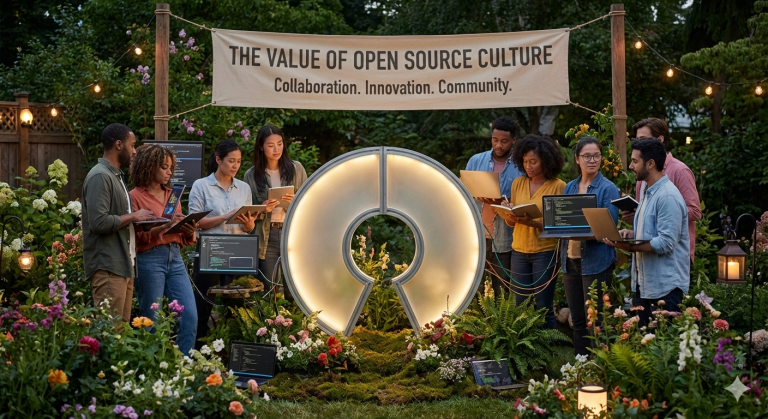
Teach Anything is openly licensed under copyleft. Its code base is available on GitHub. Professor and Akhilesh embrace the open culture which encourages collaboration and community building.
This is not only a student success story but also an example of STEM and humanities scholars working hand in hand to make a difference and learning from each other.
Now, Akhilesh’s work spans full-stack engineering, developer tooling, and practical AI systems that ship to real users. Follow his work on his website and GitHub.
His hands-on experiences at GW working on these real-world projects have contributed to his career success. It is meaningful to apply one’s skills to achieve digital justice and the greater good for the society.
Congratulations, Akhilesh!